

08 Aug Forest Bathing: A Complete Guide
Forest Bathing: A Complete Guide
The science, history and practice of forest bathing — and why it’s all about the forest.
What is Forest Bathing?
At first glance, forest bathing can sound like another modern wellbeing trend. The term itself was only coined in Japan during the 1980s, leading some people to dismiss it as a fashionable new idea.
In reality, there is very little that is new about forest bathing.
Humans have always sought out nature. From the Garden of Eden and the Hanging Gardens of Babylon to public parks, gardens and forests, people have long recognised the value of natural environments. The idea that spending time among trees can be enjoyable, relaxing and beneficial is hardly a modern discovery.
In many ways, forest bathing is similar to jogging. Humans have always run, yet the term “jogging” only became popular in the twentieth century when modern lifestyles made regular physical activity less common. Forest bathing is much the same. It is not a new activity, but rather a new name for something people have always done.
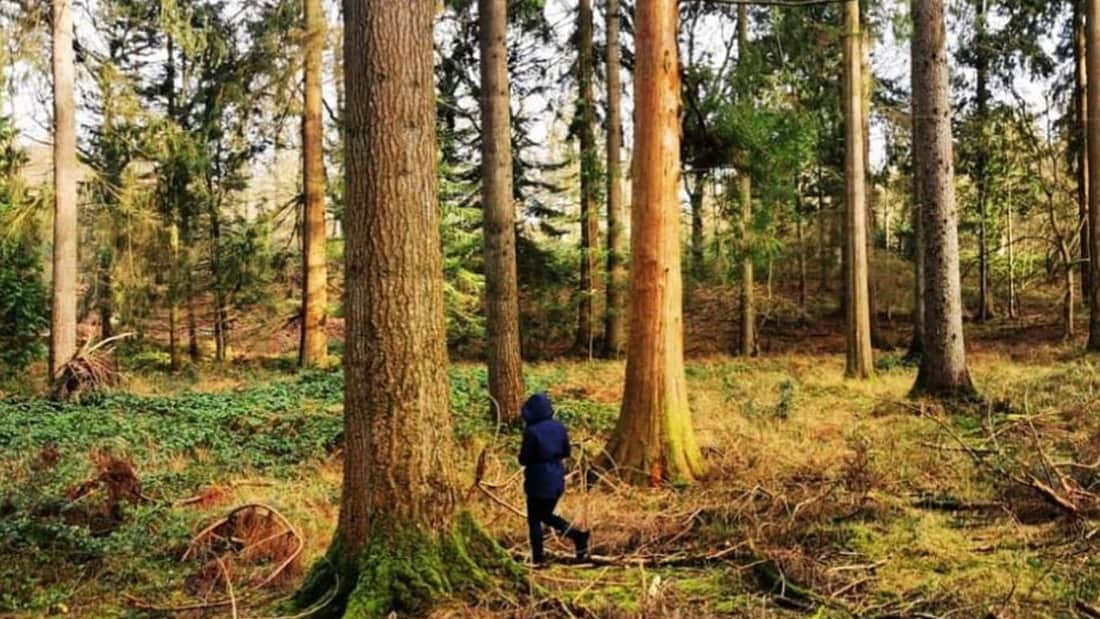
The Japanese term Shinrin-yoku is usually translated as “taking in the forest atmosphere”. At its heart, forest bathing simply means spending time in a forest and consciously engaging with the woodland environment.
It does not require specialist equipment, expensive courses or a particular level of fitness. The forest provides the experience. Forest bathing simply encourages us to pay attention to it.
Why Has Forest Bathing Become So Popular?
The popularity of forest bathing is perhaps not surprising.
Modern life is increasingly spent indoors, in vehicles, offices, homes and commercial buildings. Many people spend large portions of their day looking at screens, dealing with emails, messages and a constant stream of information competing for their attention.
Forests provide a striking contrast to these environments.
They are places where natural processes operate at their own pace. Trees grow slowly. Seasons change gradually. Wildlife follows rhythms that have existed for thousands of years. While technology, politics, fashions and society continue to change at an ever-increasing rate, forests remain largely indifferent to the modern world.
Perhaps this is one reason why so many people are drawn to them.
For many people, spending time in a forest offers a welcome break from the pressures and distractions of everyday life. Increasingly, scientific research suggests that the benefits extend beyond simple enjoyment, with studies linking time spent in forests to reduced stress, improved mood and a range of other positive health outcomes.
The appeal is not limited to any particular age group or background. Walkers, wildlife enthusiasts, photographers, families, foresters, conservationists and countless others have long enjoyed spending time in woodlands. Forest bathing simply provides a modern name for an activity that people have been enjoying for millenia.
What Does the Science Say?
One reason forest bathing has attracted so much attention is that it is supported by a growing body of scientific research.
Over the past two decades, researchers have investigated the effects of spending time in forests on a wide range of physical and psychological measures. Studies have reported associations with reduced stress, improved mood, lower blood pressure and enhanced feelings of relaxation and wellbeing. Some studies have reported measurable reductions in cortisol, the body’s primary stress hormone, following time spent in forests.
Researchers are still exploring exactly why forests appear to produce these effects. Several factors are thought to contribute, including reduced noise levels, natural scenery, physical activity, woodland scents and compounds released by trees known as phytoncides.
While individual studies vary in their findings, the overall picture is remarkably consistent: spending time in forests clearly appears to be beneficial for many people.
Perhaps the most interesting aspect of the research is that forests seem to offer more than simply an opportunity to exercise outdoors. Scientists increasingly believe that woodland environments themselves play an important role. In other words, it is not just the walking that matters – it is the forest itself.
Readers interested in exploring the scientific evidence in greater detail will find links to research papers and reviews at the end of this guide.
Why Forests Are Such Special Places
Forests are among the most valuable and important ecosystems on Earth.
They provide timber, wildlife habitat, carbon storage, clean water, soil protection and countless other environmental benefits. Yet forests offer something that many other landscapes cannot.
In many woodlands it is possible to lose sight and sound of the modern world altogether. Buildings disappear from view. Traffic noise fades away. Roads, advertisements, screens and other reminders of daily life are replaced by trees, wildlife and natural sounds.
For many people, this is one of the most appealing aspects of a forest. It provides a rare opportunity to step into an environment where the rhythms of nature dominate and the distractions of modern life temporarily recede into the background.
Forests also engage all of the senses. The canopy softens light and moderates temperature. Trees reduce wind speeds and help filter noise. The scent of woodland vegetation, birdsong, changing colours and the texture of bark and foliage all contribute to the experience of being in a forest.
Unlike many environments, forests are constantly changing. Birds, mammals, insects and countless other species contribute to dynamic ecosystems that evolve from season to season and year to year.
No two forests are ever the same. Differences in climate, soils, species, age and management create woodlands with very different characters and atmospheres. Some forests feel open and spacious. Others feel sheltered and enclosed. Some are rich in wildlife, while others are notable for their impressive trees, dramatic landscapes or sense of tranquillity.
Yet even the same forest rarely feels the same throughout the year. Fresh spring growth, summer canopies, autumn colours and the stark beauty of winter each create a very different experience. A woodland visited in Spring may seem almost unrecognisable when visited again in Autumn or Winter.
Perhaps the attraction is different for each of us. For some it is the diversity of life, for others the stillness, the constant change, the beauty of the landscape, or simply the opportunity to leave the modern world behind for a while. Whatever the reason, forests continue to fascinate and attract people throughout the world.
The Benefits of Forest Bathing
The benefits of forest bathing extend beyond those measured in scientific studies.
Many people find that spending time in forests changes the way they experience the natural world. Woodland environments encourage observation and curiosity. Birds, insects, trees, fungi and countless other details that are easily overlooked during a hurried walk often become part of the experience.
Forest bathing encourages people to slow down. Many walks are undertaken with a destination in mind. The objective may be exercise, reaching a viewpoint or simply covering a certain distance. Forest bathing shifts the focus from reaching a destination to experiencing the journey itself.
In doing so, it often encourages simple questions, like: “What have I noticed?”, or “How do I feel now?”
The answers will be different for everyone. Some people become more aware of the wildlife, trees and changing seasons around them. Others notice a greater sense of calm, relaxation or connection with the natural world. Many experience many.
Perhaps that is one of the greatest benefits of forest bathing. It encourages us both to engage and to disengage: to engage more fully with the forest around us while disengaging, if only for a while, from the pressures and distractions of the modern world.
How to Practice Forest Bathing
One of the most appealing aspects of forest bathing is its simplicity. At its heart, forest bathing is simply about immersing yourself in the forest, both physically and mentally. It is less about doing something and more about allowing yourself to experience the woodland environment without distraction.
There is no single correct ‘method’ and no special expertise is required. Forest bathing may just involve walking slowly through a woodland, pausing to observe wildlife, listening to birdsong, noticing woodland scents or simply sitting quietly among the trees.
The emphasis is not on distance, speed or achievement, but on engaging with the woodland itself and temporarily letting go of the pressures and distractions of modern life.
Some people spend ten or fifteen minutes forest bathing. Others may spend several hours. The exact duration matters far less than the willingness to slow down, let go of distractions and allow yourself to become immersed in the woodland environment.
This is often easier said than done. Many of us are accustomed to constant stimulation, endless streams of information and minds that are always focused on the next task, problem or responsibility. It may take time before the pace of the forest begins to replace the pace of everyday life.
The body often arrives in the forest long before the mind does.
Fortunately, there is no need to force the process. Simply spending time in a woodland is often enough. The forest has been there long before we arrived and will remain long after we leave. There is no rush.
Why Forests Matter
As forest bathing has grown in popularity, the term has sometimes been applied to a wide range of nature-based activities. While spending time in any natural environment can be enjoyable and beneficial, forests offer a unique combination of characteristics that are difficult to replicate elsewhere.
A forest is more than a collection of trees. It is a complex ecosystem with its own atmosphere, sounds, scents, wildlife and microclimate. The canopy softens light, moderates temperature and helps screen out many of the sights and sounds of the modern world. The experience of walking beneath mature trees in a woodland is very different from sitting beside a single tree in an urban environment.
This distinction is important. Forest bathing is not simply about being outdoors or appreciating nature. At its heart, it is about immersing oneself in a forest environment and experiencing the unique qualities that forests provide.
That does not diminish the value of parks, gardens or other natural spaces. They offer benefits of their own. However, the practice of forest bathing remains rooted in the forest itself.
Do You Need a Guide?
Many people first encounter forest bathing through guided walks, organised programmes or retreats.
These experiences can be enjoyable and may help introduce newcomers to the concept. They can also encourage participants to notice aspects of the woodland environment that they might otherwise overlook.
However, guided experiences are not essential.
The central element of forest bathing is the forest itself.
Long before the term Shinrin-yoku was coined, people were spending time in forests, enjoying nature, observing wildlife and appreciating the changing seasons. The benefits associated with forest bathing did not suddenly appear in the 1980s; what changed was the name, not the activity.
Once the concept is understood, forest bathing can be practised independently in almost any suitable woodland environment. In most cases, no specialised equipment is required and no fees need to be paid. A local woodland, forest park, nature reserve or other accessible forest can provide everything needed to experience forest bathing.
For some people, a guide may enhance the experience. For others, the greatest appeal lies in exploring a woodland at their own pace and in their own way. Neither approach is right or wrong.
What matters is the forest itself.
Is There a Best Type of Forest?
A common question is whether certain forests are better for forest bathing than others.
The simple answer is no.
There are many different types of forests and woodlands, and each has something to offer. Ancient native woodlands, young forests, broadleaf woods, conifer forests, mixed woodlands, estate forests and forest parks can all provide rewarding experiences.
Each woodland possesses its own character, atmosphere and appeal.
That said, many people find the most immersive experiences occur in forests where signs of the modern world become less noticeable. Woodlands that shield visitors from traffic noise, buildings, roads and other distractions often create a stronger sense of separation from everyday life.
This is not because one type of forest is inherently better than another. Rather, it reflects one of the qualities that many people value most in forests: the opportunity to leave the modern world behind for a while.
Rather than searching for the perfect forest, it is often better to explore different woodlands and discover what makes each one unique.
Further Reading
The idea behind forest bathing may be simple, but the science and history behind it are surprisingly extensive. Readers wishing to learn more may find the following resources useful.
- MDPI (Multidisciplinary Digital Publishing Institute): Forest Bathing (Shinrin-yoku) and Preventive Medicine: Immune Modulation, Stress Regulation, Neurocognitive Resilience, and Neurological Health
- Cleveland Clinic:Forest Bathing: What It Is and Its Potential Benefits
- Forestry England: Forest Bathing
A Simple Idea with Deep Roots
Forest bathing may be a modern term, but the experience it describes is not.
Throughout history, people have been drawn to forests for countless reasons. Some seek beauty, some seek solitude, some seek adventure, and some simply enjoy spending time among trees. The reasons may differ, but the attraction remains remarkably consistent.
Perhaps this should not surprise us. Forests offer something that is becoming increasingly rare: an environment where the pace is slower, the distractions are fewer and the modern world can, for a while at least, fade into the background.
The science is interesting. The history is interesting. But neither is necessary.
Simply visit a forest.
Slow down.
Allow it to benefit you.
Bathe in it.
To learn more about Forest Bathing in Ireland, just Contact Ecoplan Forestry
